September 27, 2026
Statutory Warranty Rights: Who Pays at Month 14
The hinge went first. Fourteen months after delivery, the lid began lifting off its base on every opening, and the screen flickered past ninety degrees. The maker's one-year warranty had lapsed, and its support chat offered a paid repair quote. That quote is the wrong first move. In the UK, statutory warranty rights outlive the manufacturer's promise by years, and the business that owes you the fix is the shop that sold the laptop, not the brand on the lid.

Key Takeaways: Yes, a laptop that fails at month 14 can still be claimed for in the UK, and the retailer, not the manufacturer, owes the remedy.
- The refund-on-demand window is long closed, so start by asking the shop to repair or replace.
- After six months, proving the fault was there at delivery is your job, and a technician's report is the evidence.
- If the shop's repair fails, you can claim a price reduction or a refund.
- In the EU, choosing repair over replacement lengthens the legal guarantee.
Can I claim for a faulty laptop after the warranty has expired?
Yes, in the UK a laptop that develops a fault after the maker's warranty ends can still be claimed for, because the Consumer Rights Act gives you rights against the retailer that last far longer than a one-year guarantee.
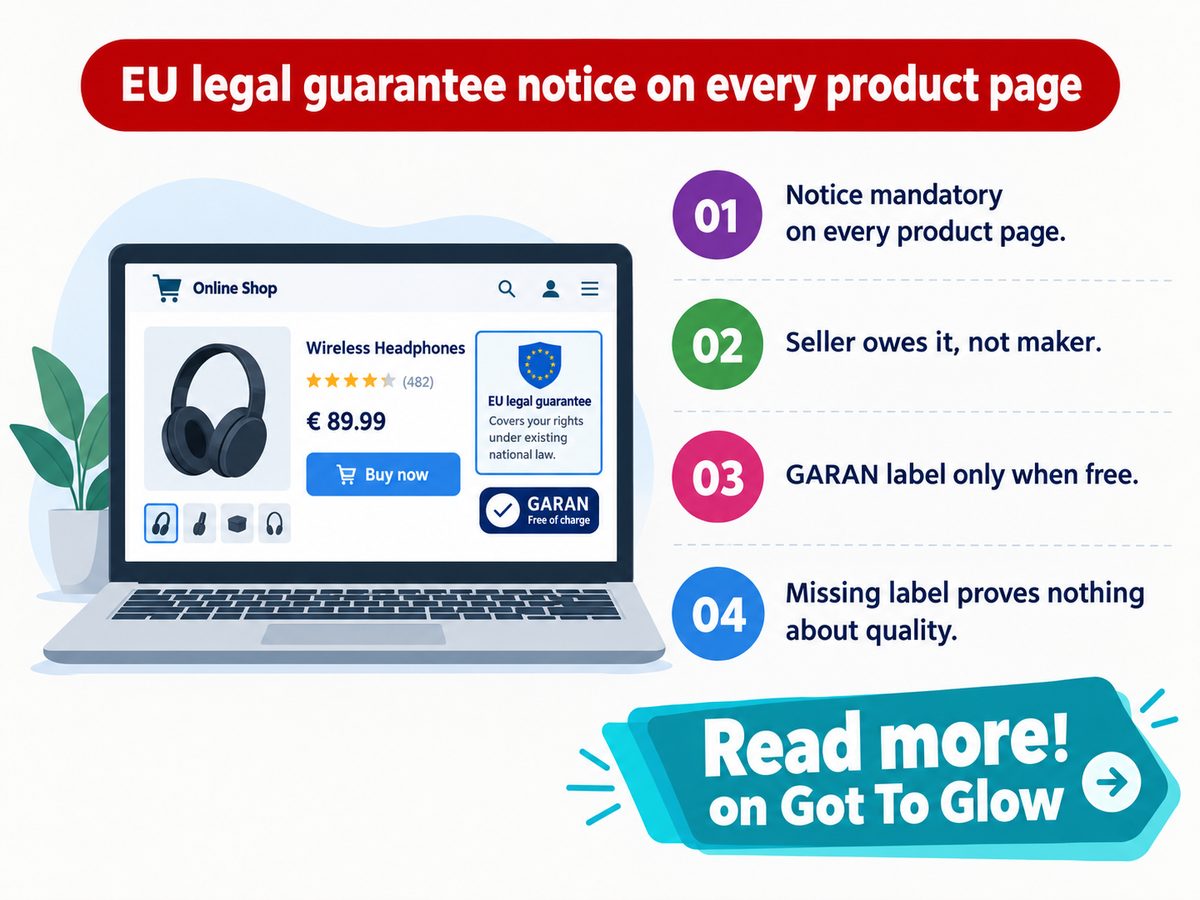
The warranty in the box is a voluntary extra. Your statutory rights are the floor beneath it, and a 2026 Which? guide to faulty goods, updated on 1 September, is plain that they run against the retailer rather than the manufacturer. So write to the shop: the brand can sell you a repair, but only the retailer owes you one. EU buyers now see this spelled out before paying, via the new mandatory EU legal guarantee notice on product pages.
Timing is harder. For six months the law presumes a fault was there on arrival; after that, Which? says, the burden is yours. At month 14 that means a written report from an independent technician saying the fault is inherent, not a knock. I'd pay for that report before arguing with anyone, because it costs less than losing the argument, usually.
Paying in instalments doesn't move that duty, though refunds on a split plan follow the lender's rules, as our guide to Buy Now Pay Later refunds and statutory cover on device financing sets out.
Four numbers settle what a month-14 claim gets you. Three come from that Which? guidance; the window share is my own arithmetic from its limits, not a published figure.
Refund-on-Demand Window
30 days
Closed 13 months ago
Your Bill If the Shop Repairs
£0
Once the fault is proven
Repair Attempts the Shop Gets
1
Then refund or price cut
UK Claim Window After Year One
83%
Where month 14 lands
The repair-attempt rule is the lever most people never pull. Once the shop has had its go and the fault returns, the fight stops being about proof and becomes about what you get back. Keep every job sheet.
Five-sixths of the time you have to bring a UK claim starts after the maker's warranty has already run out.
How do statutory warranty rights compare in the UK and EU?
Both outlast the maker's warranty, but the UK gives you a longer window to pursue the retailer, while EU rules since July 2026 reward repair and make manufacturers fix some kit after the guarantee ends.
The European Commission says the right to repair directive applies from 31 July 2026, and it changes the maths for EU phone and tablet owners. Read each row as a question for the shop or maker.
| Dimension | UK vs EU | What it means for you |
|---|---|---|
| 🧾 Who owes the fix | UK The retailer, not the brand EU Seller, then the maker |
✅ Your first letter goes to the shop |
| 💰 Later repair cost | UK Whatever a repairer quotes EU A reasonable price, by law |
⚠️ Get two quotes before agreeing |
| ⏱ Claim window | UK Up to 6 years (5 Scotland) EU 2 years, the legal minimum |
✅ An expired warranty ends nothing |
| 🛠 Repair reward | UK No extra cover EU +12 months of guarantee |
⚠️ In the EU, fixing beats swapping |
| 🔋 Kit in scope | UK No maker duty in law EU Phones, tablets, washers |
❌ Laptops sit off the EU list |
| 🏁 Best suited for | UK Any fault, months 13 to 72 EU Phone or tablet worth fixing |
🏁 Claim first, pay a repairer last |
UK buyers have time but carry the proof; EU buyers earn extra cover for choosing repair. Laptops fall into a gap, because the Commission's post-guarantee list names phones and tablets, not laptops. Whether a battery that fades at month 14 counts as a fault or as fair wear is, in my opinion, the least settled question here.
A month-14 fault lands in the longest stretch of the UK window, so the question is whether you can prove it, not whether a claim exists. Our derivation from the Which? limits against a one-year maker warranty; Scotland's is a year shorter.
Where an out of warranty repair claim falls apart
Month-14 claims usually fail on evidence and paperwork rather than on the law itself, because the fault has to be shown to be inherent and the retailer must get its chance to repair first.
US buyers start elsewhere. The FTC's warranty guidance, last updated in December 2025, says implied warranties such as the implied warranty of merchantability come from state law, last up to four years in some states, and can be excluded when a seller marks goods "as is" where the state allows it. Read the receipt first: two words can erase the claim.
I'd also push back on the checkout pitch. An extended warranty mostly duplicates rights you already hold against the shop for faults, so it earns its price only through accidental damage cover. Buy it for the drop, not the defect. Who pays gets murkier still when an AI shopping agent buys the wrong thing on your behalf.
- Paying an independent repairer first hands the retailer an argument that the repair caused the fault.
- Accidental damage is never a statutory claim: a screen cracked by a fall is yours to fix.
- Messaging the brand is not a claim; the shop must hear from you in writing.
Repair it, through the retailer. For a month-14 failure with no drop or spill behind it, that is the call. Replace only if the shop's repair fails, and pay a repairer only after a written refusal. This week, dig out the order confirmation and send the shop a dated email that cites the Consumer Rights Act and asks for a repair by a named date.
Related: who owes you a refund for a bricked smart device
Related: how a refurbished phone warranty compares with your statutory rights