August 03, 2026
AI Agent Bought It Wrong: Keep, Return Or Resell
Your AI agent bought it wrong, and the box is already on your doorstep. Not a scam, not a stolen card, just a size 9 where you needed an 11, ordered while you slept by software you gave a spending limit and nothing more specific than that. Now three options sit in front of you, and the retailer's return page was never written with a shopping agent in mind.
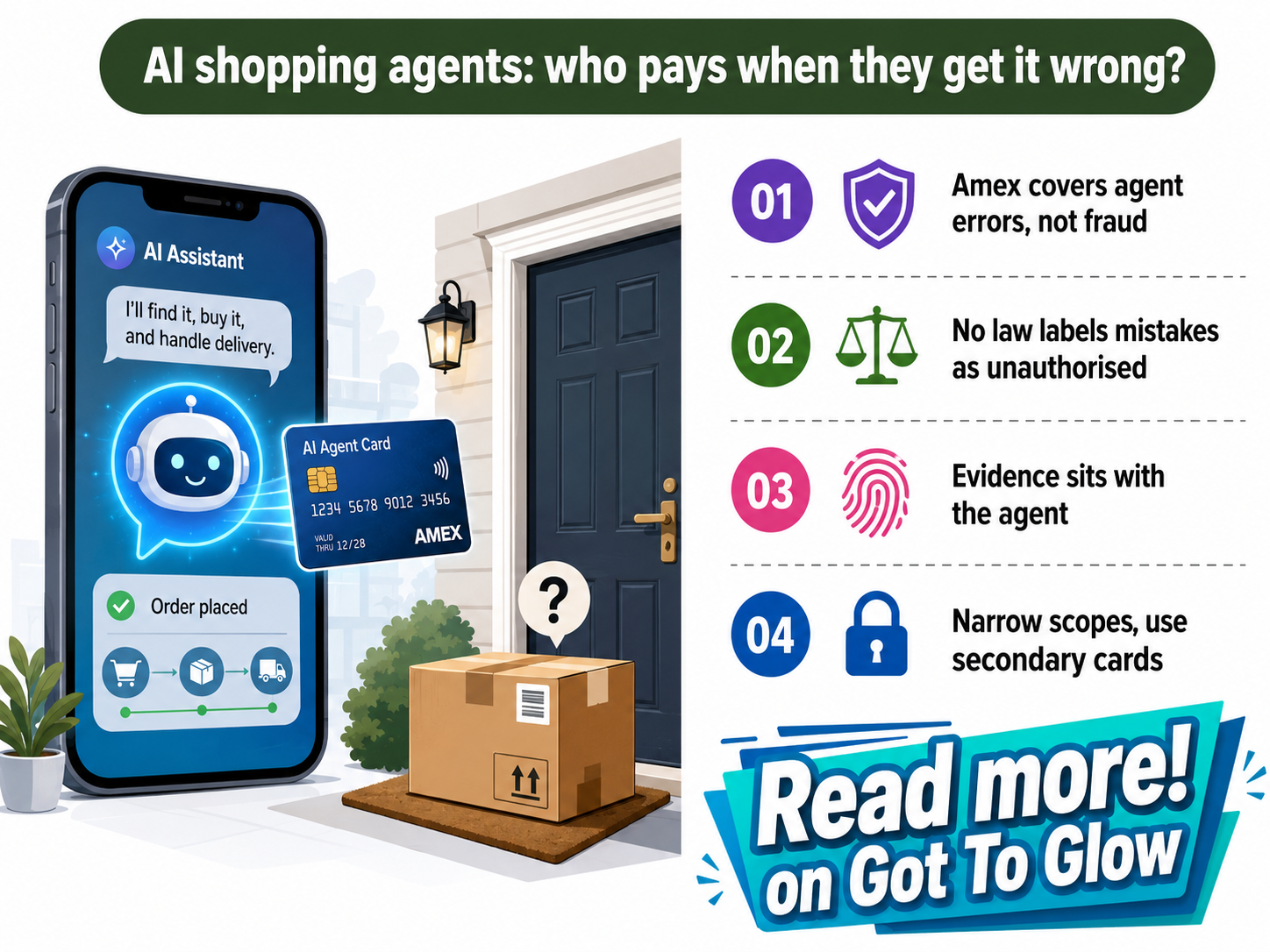
Why Your AI Agent Bought It Wrong
An AI agent buys the wrong item because it was given a budget and a rough instruction, not your actual judgement, so it optimises for the closest match inside its rules rather than the item you would have picked yourself standing in the aisle.
Card networks built the payment rails for this faster than anyone built the consumer protection around it. Visa's Trusted Agent Protocol and Mastercard's Agent Pay both went live confirming an agent is really an agent, not a scraper, which solves the merchant's fraud problem without touching yours at all. Amex is the one issuer that also promised to cover an error the agent itself made, and that promise does not extend to a purchase you would simply call a bad call. The gap between those two things, a systems error and a bad choice, is exactly where a wrong-size delivery lands, and it is the same kind of gap that let a shared family plan quietly extend permissions past the person who set it up.
Issuers With Error Cover
1 of 3
Amex only, so far
Adults Who Trust Agents
24%
Forrester, routine purchases
Best Resale Value
Sealed, unopened
Before you open the box
Return Window Starts
Delivery date
Not the order date
The card networks built the rails to prove the agent was really yours. Nobody built the rail that proves the purchase was really what you wanted.
Should You Keep, Return Or Resell It?
Keep it if the item is genuinely usable and close enough to right, since a return costs time and sometimes a restocking fee that a small mismatch may not be worth clearing.
Return it through the retailer's ordinary consumer process, the same one you would use for a purchase you made yourself, because most sellers do not yet have a separate policy for an agent's own mistake and will simply apply their normal window and condition rules. Resell it, still sealed if possible, when the item is one that holds value and a straightforward return is not available or the window has already closed. Weigh the three against how long you have, since the practical failure everyone hits with delegated buying, the way a subscription's pricing model can change underneath you without warning, is discovering the mismatch after the easy option has expired.
- Check the delivery date, not the order date: most return windows count from when the parcel arrived, which may be days after the agent placed the order.
- Keep it sealed until you decide: an unopened item keeps every option open, including resale at close to its original price.
- Screenshot the agent's order confirmation: a support agent reading a human complaint script may not recognise "my AI picked wrong" without evidence of what happened.
- Ask your card issuer directly whether it has an agent-error policy before you assume the answer is no.
- Compare the resale price against the restocking fee before you choose a route, since a fee can quietly cost more than the gap between the two.
What Each Route Actually Costs You
None of the three options is free, and the honest comparison is time against money rather than one clearly correct choice for every item.
A retailer return usually costs nothing beyond the inconvenience if you are inside the window and the item is unused, but electronics and opened packaging can carry a restocking fee that eats a meaningful slice of the price. Reselling privately, on a marketplace or through a local buy-and-sell group, gets you closer to full value on a sealed item but takes longer and depends on someone else wanting exactly what your agent bought. Keeping it costs nothing today and everything later, if it sits unused the way a feature that shipped without the workflow it needed quietly goes unused too.
| Route | Typical Cost | Best For |
|---|---|---|
| Retailer return | Free within 7 to 10 days, unopened | Anything still inside the window |
| Opened electronics return | A restocking fee, seller-dependent | Only if resale is not realistic |
| Resell sealed | 7 to 14 days to find a buyer, near full value | Popular items after the return window closes |
| Resell opened or used | A meaningful price cut, still faster than a dispute | Items you tried before deciding |
| Keep it | Rs 0 today, the full price long term if unused | A near-miss you will genuinely use |
| Chargeback dispute | Weeks of process, only 1 issuer promises cover | A genuine agent malfunction, not a bad guess |
Notice that a chargeback dispute sits at the bottom of that list rather than the top. It is the slowest route, and only Amex has said in writing that it will side with you on a purchasing error rather than treating it as a purchase you authorised, because you did authorise the agent, even if not that specific size.
What This Will Not Fix
None of these three routes stops the same mismatch happening again next week, since the underlying issue is the instruction you gave the agent, not the item it happened to pick this time.
Tighten the instruction, not just the budget, because a spending limit only stops the agent overspending, not misreading a size, a colour or a variant. An agent told to buy "a size 9 running shoe under a price limit" will keep buying size 9 running shoes, correctly, even when your feet have changed or the brand runs small. Review the agent's permissions the same week you notice a mismatch, rather than waiting for a second wrong delivery to prompt the change. And do not assume every issuer will eventually match Amex's promise. Card networks compete on the rails that make merchants money first, the same pattern behind a cheap connected device shipping with credentials nobody hardened, and consumer-side promises tend to arrive only once enough people have already been burned.
Key Takeaways
- Return through the retailer's normal process first; most sellers have no separate agent-error policy yet.
- Keep the item sealed until you decide. It keeps every option, including resale, open.
- Only Amex currently promises to cover a genuine agent error, not a bad guess inside its rules.
- Tighten the instruction you give the agent, not just its spending limit, so the same mismatch stops repeating.
So the next time a box arrives that your agent bought wrong, check the delivery date first, keep it sealed while you decide, and read your own card issuer's actual policy before assuming a dispute will work. The rails that let the agent spend are live. The rules that protect you are still being written.
No comments
Post a Comment